

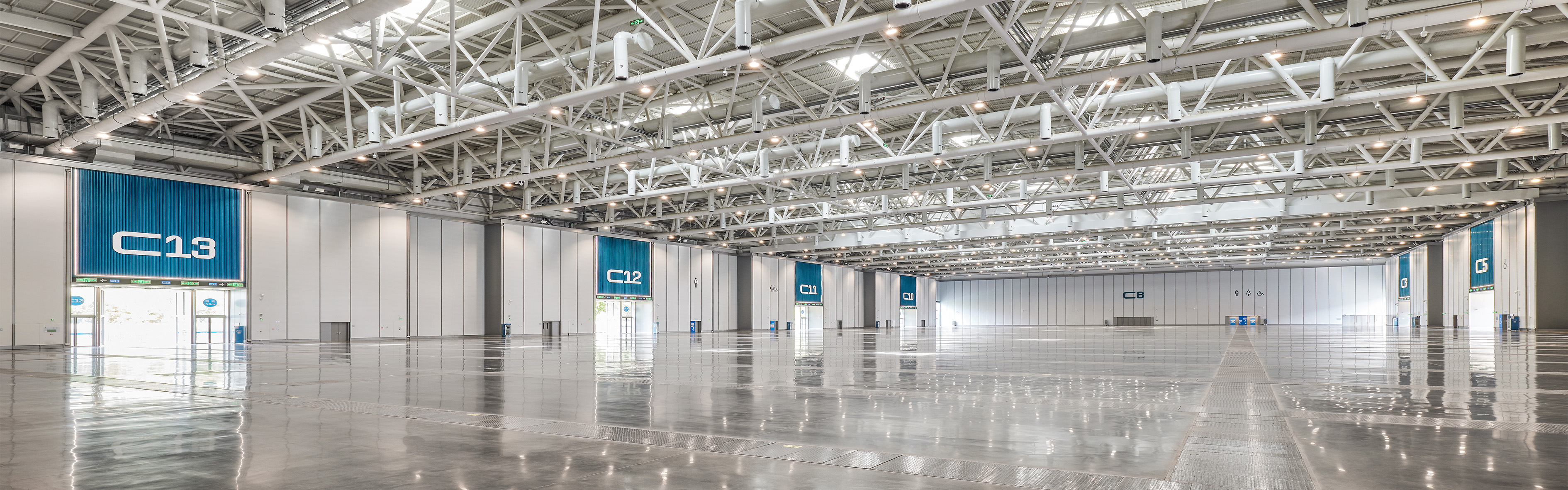
Yesterday, the five-day 2026 World Robot Conference drew to a successful close in the Beijing Economic-Technological Development Area (Beijing E-Town).It released 44 new technologies and solutions, drew around 557,000 on-site participants, and invited more than 10,000 foreign visitors to the exhibition. Bringing together industry, academia and research forces from around the world, this year’s conference integrated achievement releases, idea exchanges, product displays and public science popularization, delivering a substantial industrial report card. It comprehensively demonstrating the thriving development of the humanoid robot and embodied intelligence industries, injecting powerful momentum into innovation and development of the global robotics industry, and mapping out a new blueprint for the development of the embodied intelligence industry.
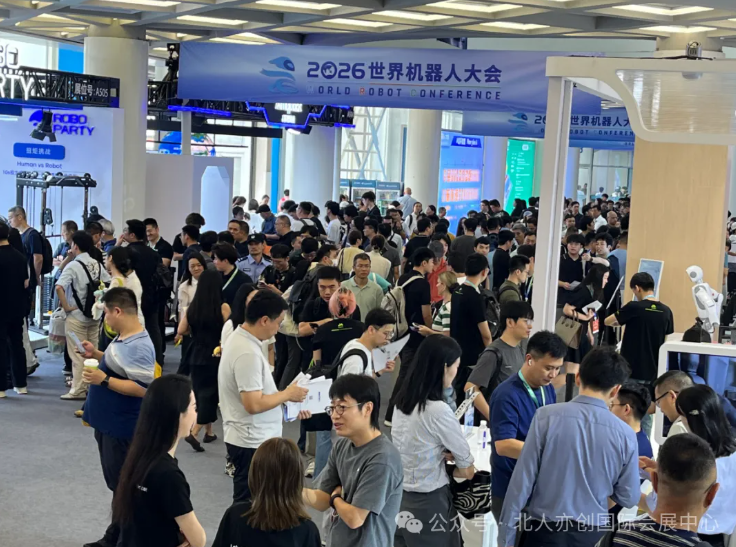
The conference featured seven main forums and 71 concurrent events, releasing 44 new technologies and solutions — including the embodied world model, rope-driven dexterous hands, flexible tactile data-collection devices and brain-cerebellum fusion chips — providing a "guiding light" for robotics technology innovation. In terms of internationalization, the conference received support from 30 international institutions, invited 40 overseas enterprises to exhibit and more than 10,000 foreign visitors to attend, and brought together 11,418 teams and 17,802 contestants from 26 countries to compete on site, attracting overseas delegations from countries such as the United States, Saudi Arabia, South Korea and Ecuador for visits and exchanges. In addition, the conference drew widespread attention from domestic and international media and the public; on-site participation reached 557,000, an increase of 106% over the previous session; viewers of the live broadcasts of the conference, exhibition and competition reached 110 million, up 94 percent; and topic views on short-video platforms reached 730 million, up 62 percent.
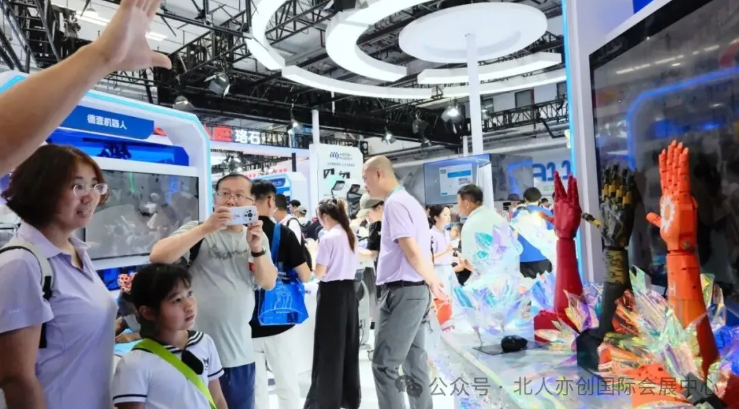
The exhibition section of the conference was full of highlights, with more than 3,000 innovative robot exhibits of various kinds on display and a large number of cutting-edge new products and mature applications presented together — from humanoid robots and quadruped robots to intelligent robotic arms — covering fields such as industrial manufacturing, emergency rescue, livelihood services and security, vividly demonstrating the technological leap of robots from the laboratory to real production and living scenarios.
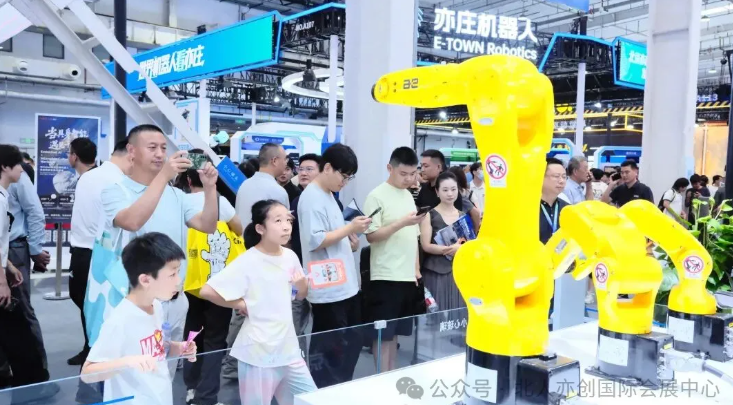
Over the past weekend, the conference held its Public Open Day, with citizens' enthusiasm for the exhibition reached unprecedented heights; the halls were crowded, and many families came together to experience this technology feast. Young people stopped to watch humanoid robots, carefully observing demonstrations of robots climbing stairs and dexterously grasping objects; middle-aged and older visitors enthusiastically tried out the functions of various service robots, raising their phones to capture the highlights. The Robot Consumer Street was bustling with activity. Pancake-making and coffee-making robots were operating smoothly, while long queues formed in front of interactive experiences such as robot rock-paper-scissors and robot battles. Audience touched frontier technology up close and immersed themselves in the infinite possibilities that robots bring to future life, as the seeds of technology were sown in more hearts amid laughter and joy.
Beyond the bustling exhibition experience, a series of major reports, industry initiatives and industrial plans were released during the conference, becoming its intellectual and institutional outcomes. The main forum released the "2026 Humanoid Robot Industry Development Report," which systematically reviewed the industry's overview, development trends, technology landscape and full industrial chain, with a focus on the industrial development of five countries — China, the United States, Germany, South Korea and Japan. The report put forward four core findings for the industry: humanoid robots have entered a new stage of "clustered emergence"; the industrial chain has achieved a dual leap in "quality, efficiency and capability"; industry applications have entered the deep-water zone of "full-scale rollout"; and ecosystem building has formed a new paradigm of "symbiosis and shared prosperity." The report showed that in the first half of 2026, China's humanoid robot shipments exceeded 40,000 units, with its global share further rising to 97 percent.
Addressing industrial ethics and global collaborative development, the Chinese Institute of Electronics (CIE) with the World Robot Cooperation Organization (WRCO) and 268 international institutions and enterprises, jointly released the "Initiative for the Upward and Good Development of Intelligent Robots," advocating upward and good development, openness and inclusiveness, and co-building and sharing. The conference also launched the "Global Robot Application Exploration Program," a "pioneer trial" program for global robot application scenarios. Jointly initiated by the World Robot Cooperation Organization and the Chinese Institute of Electronics, in collaboration with international industry institutions, research institutes and enterprises, it solicits application scenario needs globally and selects 1,000 application scenarios each year for free trials and secondary development of robots, accelerating the translation of technological achievements into industrial value, driving product iteration and optimization with practical feedback from real scenarios, achieving two-way empowerment between technology application and scenario deployment, and building an open and win-win global robotics industry innovation ecosystem.
Beijing E-Town, where the conference was held, unveiled "Beijing Robot Domain" — a vision for building a new society of human-machine integration and embodied intelligence — sketching a city-level blueprint for the development of the embodied intelligence industry. According to the plan, the area will accelerate the creation of 100 distinctive, practically deployable robot products, promote applications in 1,000 niche fields, accelerate large-scale production of embodied intelligent robots at the 100,000-unit-set level, and build capacity to produce one million sets of key core components. The Development Area will rely on the 12-square-kilometer "Beijing Machine Domain" embodied intelligent manufacturing leading zone as its core carrier, continue to expand industrial park space, and systematically empower the four dimensions of "research, manufacturing, application and safety."