

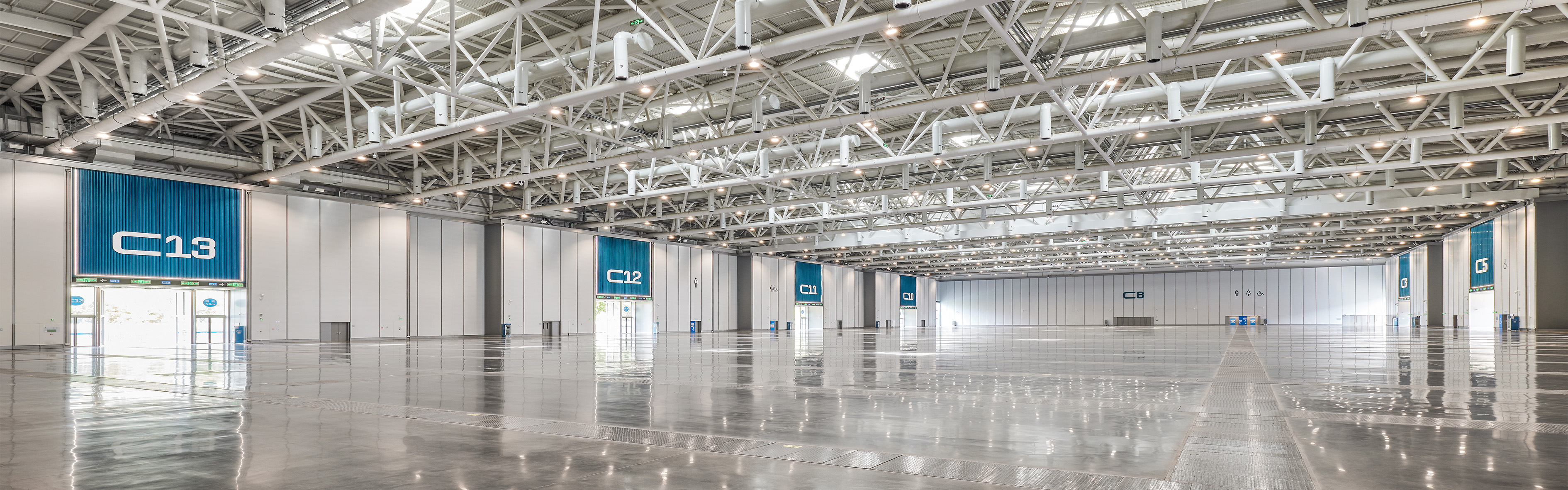
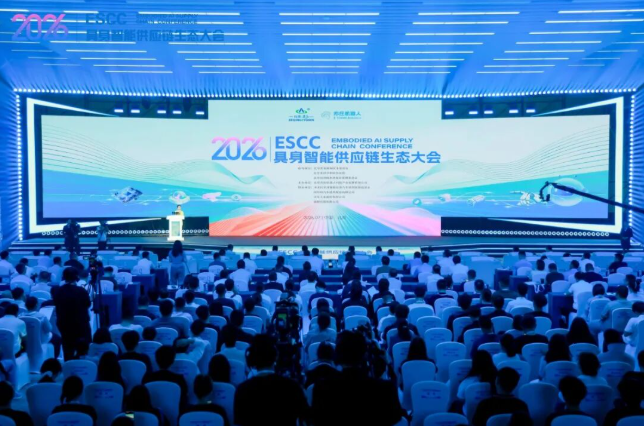
On July 30, the 2026 ESCC Embodied Supply Chain Conference was held at Beiren Etrong International Exhibition & Convention Center in E-town, Beijing. Under the theme "Smart Chain for the Future, Win-Win Together," the conference brought together more than 400 upstream and downstream enterprises in the embodied intelligence supply chain and over 50 industry experts for in-depth exchanges and matchmaking on the pain points of mass production, the shortcomings of supply chain collaboration and the paths to co-building an ecosystem.
2026 is widely regarded by the industry as the first year of mass production for embodied intelligence. From prototype to mass production, a stable, efficient and agile supply chain is the key variable determining whether the industry can cross the last mile. At the conference, as a series of major outcomes—including the release of a supply chain platform, the formation of an alliance and strategic signings—were unveiled, Beijing E-Town is accelerating the building of a full-domain integrated supply chain system for embodied intelligence, driven by collaborative supply chain innovation.
A relevant official from the Beijing Economic-Technological Development Area (BDA) said in his remarks that E-town has now developed a complete-chain innovation paradigm for complete-robot manufacturing, built a pilot testing and validation platform for humanoid robots, and put into operation the first 10,000-unit-level robot factory. It is accelerating the creation of a new paradigm for embodied-intelligence complete-robot manufacturing that integrates pilot production, large-scale contract manufacturing, full-chain component supply and rapid logistics response. He welcomed global industry chain partners to take root in E-town and pursue collaborative development, jointly seizing new opportunities for industrial growth.
1
Supply Chain Rapid Response Platform Released
Response in as fast as 2 hours
The conference's first landmark achievement was the official release of "Ji Yin Factory" (Machine Gene Workshop), Beijing E-town's supply chain rapid response platform. A relevant official of Beijing Yizhuang Robotics Technology Industry Development Co., Ltd. introduced the platform's functions and operating mechanism on site.
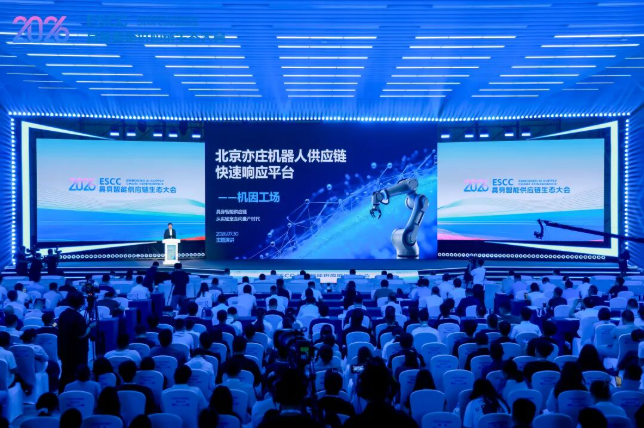
The platform covers functional modules such as a selection and component center, a rapid prototyping center, a 3D printing center and a shared factory. Replacing the inefficient path of enterprises coordinating individually with a shared and collaborative model, it can support one-stop services across the entire process of robots from prototype design and prototype verification to commercial mass production, and can provide "doorstep" full-chain supporting facilities for Beijing-Tianjin-Hebei whole-machine manufacturing.
Leveraging the advantages of Beijing E-town's mature robotics industry cluster, the platform has implemented the country's first "12485" rapid response system — that is, 1-stop selection via a BOM covering the entire robot category supply chain, a 2-hour response and 48-hour delivery, backed by 5 major guarantees covering selection, capacity, cost, collaboration and implementation — providing enterprises with precisely matched and ultra-fast supply chain support services.
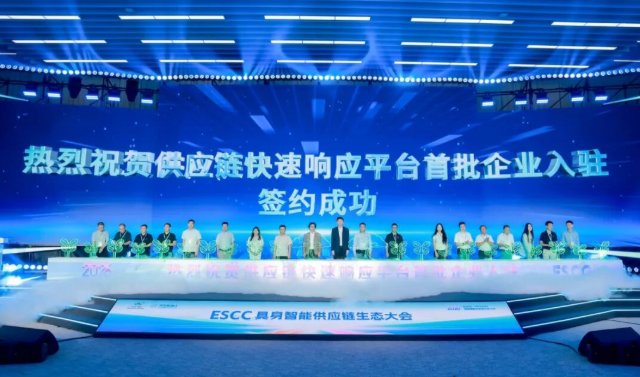
The platform's offline space has been completed in the Beijing Robot Industrial Park (E-town), with a first-phase area of 2,800 m² that can provide free office space for no fewer than 50 high-quality supply chain enterprises. At present, the platform has completed the initial aggregation of supply chain resources, and the first batch of resident enterprises covers fields such as core components, production and manufacturing, and AI chips. At the event, more than 20 industry-leading enterprises — including ESWIN Computing, Orbbec, Zhongda Leader, Huixi Intelligent, Fibocom, Quanzhibo, Luoshi Robotics and Digua Robotics — signed on as residents.
2
Beijing-Tianjin-Hebei Collaborative Consortium Established
Turn-Key Platform Launched in Tandem
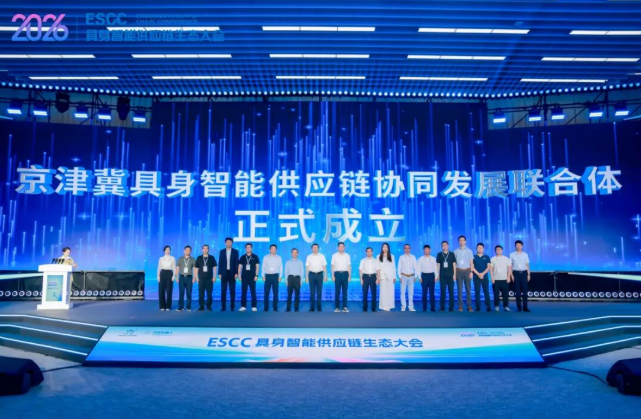
At the conference site, the Beijing-Tianjin-Hebei Embodied Intelligent Robot Supply Chain Collaborative Development Consortium was officially established, and the participating parties signed a letter of initiative. The consortium aims to build an industrial cooperation platform for the three regions, promote complementary advantages and collaborative progress in the Beijing-Tianjin-Hebei robotics industry, and accelerate the building of an industrial ecosystem led by leading complete-robot manufacturers and supported by clustered key components.
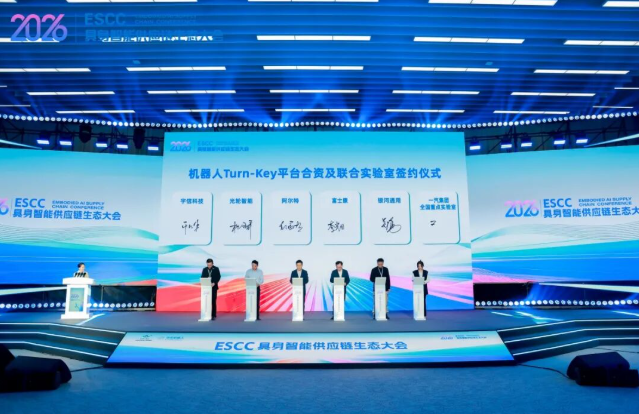
Concurrently, the Robot Turn-Key Platform was officially released. Integrating design and R&D, supply chain support and large-scale manufacturing capabilities, the platform can provide robot enterprises with full-stack "turn-key" services from concept to mass production, greatly shortening product development cycles and lowering the threshold for industrialization. On site, IAT Automobile signed a package of cooperation agreements with Foxconn, Guanglun Intelligent, Galbot and other enterprises.
3
Industry Experts and Leading Enterprises Gather
Discussing the Path of Supply Chain Collaboration
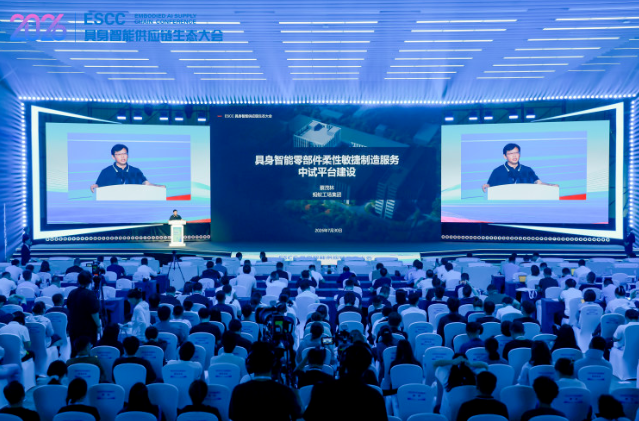
In the thematic speech session, heads of industry-leading enterprises — including Gao Jiyang, founder and CEO of Galaxea; Pan Feng, Vice President of JD Group; and Cai Maolin, founder of Antworks Group — took the stage in turn and, around frontier topics such as the evolution of intelligent bodies, building a full-stack robotics ecosystem, and the building of flexible and agile manufacturing platforms for components, shared their cutting-edge thinking on supply chain collaboration from multiple dimensions including large models, whole-machine R&D, component manufacturing and pilot verification.
The panel discussion, themed "Rapid Supply, Shared Ecosystem: Building a Collaborative Response Loop Between Core Components and Complete Robots for Embodied Intelligence," was moderated by Liang Liang, Vice Chairperson and Secretary-General of the MIIT Technical Committee for Humanoid Robots and Embodied Intelligence Standardization, and Deputy Secretary-General of the Chinese Institute of Electronics (CIE). The panel brought together Cheng Hao, Founder of Booster Robotics; Ren Geng, Founder of Kunlunx AI; Shao Yuanxin, Founder of RobStride Dynamics; Pan Feng, Vice President of JD Group; Qian Diansheng, Marketing Director of Arm China; and Wang Mengzhao, Party Branch Secretary of Tangshan Baichuan Group. They engaged in in-depth dialogue on topics including agile supply chain support, upstream-downstream coordination mechanisms, and the development of shared industry service platforms.
Guests generally agreed that as the industry moves from the demo stage toward small-batch mass production, indicators such as long-term product reliability, lifespan and operation become key tests for the supply chain. The embodied intelligence industry is a marathon, and all parties in the industrial chain should coexist, co-build and share, continuously improving the supply chain system through standardization exploration, software-hardware collaborative innovation and multi-scenario trials.
4
Building the Supply Chain Ecosystem
Boosting Large-Scale Mass Production of Embodied Intelligence
As the permanent host of the World Robot Conference, Beijing E-town has gathered more than 300 robotics and embodied intelligence ecosystem enterprises, with an industrial chain scale of over RMB 20 billion, and has been officially approved as a municipal-level future industry pilot zone. Recently, at a series of themed press conferences on the capital's start of the 15th Five-Year Plan period, Beijing E-town clearly stated that by 2030 its robot production capacity will reach 500,000 units/sets. Achieving this goal is inseparable from the support of a stable, efficient and agile supply chain system.
The supply chain rapid response platform "Ji Yin Factory," the "12485" rapid response system, and the concurrently launched Beijing-Tianjin-Hebei embodied intelligence supply chain consortium and Robot Turn-Key Platform released at this conference will continue to strengthen, supplement and extend the chain, matching the pace of capacity expansion with rapid response and lowering the threshold for industrial scaling through collaborative sharing, thereby solidifying the supply chain foundation for the 500,000-unit/set capacity goal. Driven by supply chain innovation, Beijing E-town is pushing the embodied intelligence industry from single-point breakthroughs to systematic victory, fully supporting Beijing in building a globally leading highland for the embodied intelligent robot industry and exporting the E-town approach for national high-end intelligent manufacturing.